Every agent your team builds solves a real problem once. The question Exchange exists to answer is what happens to it after that — does it sit in one workspace until someone leaves and nobody remembers how it worked, or does it become something the rest of the organization (or the wider Orvoq community) can just pick up and use?
Exchange is Orvoq's answer: a place to discover agents other people already built, try them without commitment, and — if you're the one who built something worth sharing — get credit and, if you choose, get paid for it.
Finding an agent fast, instead of building one from zero
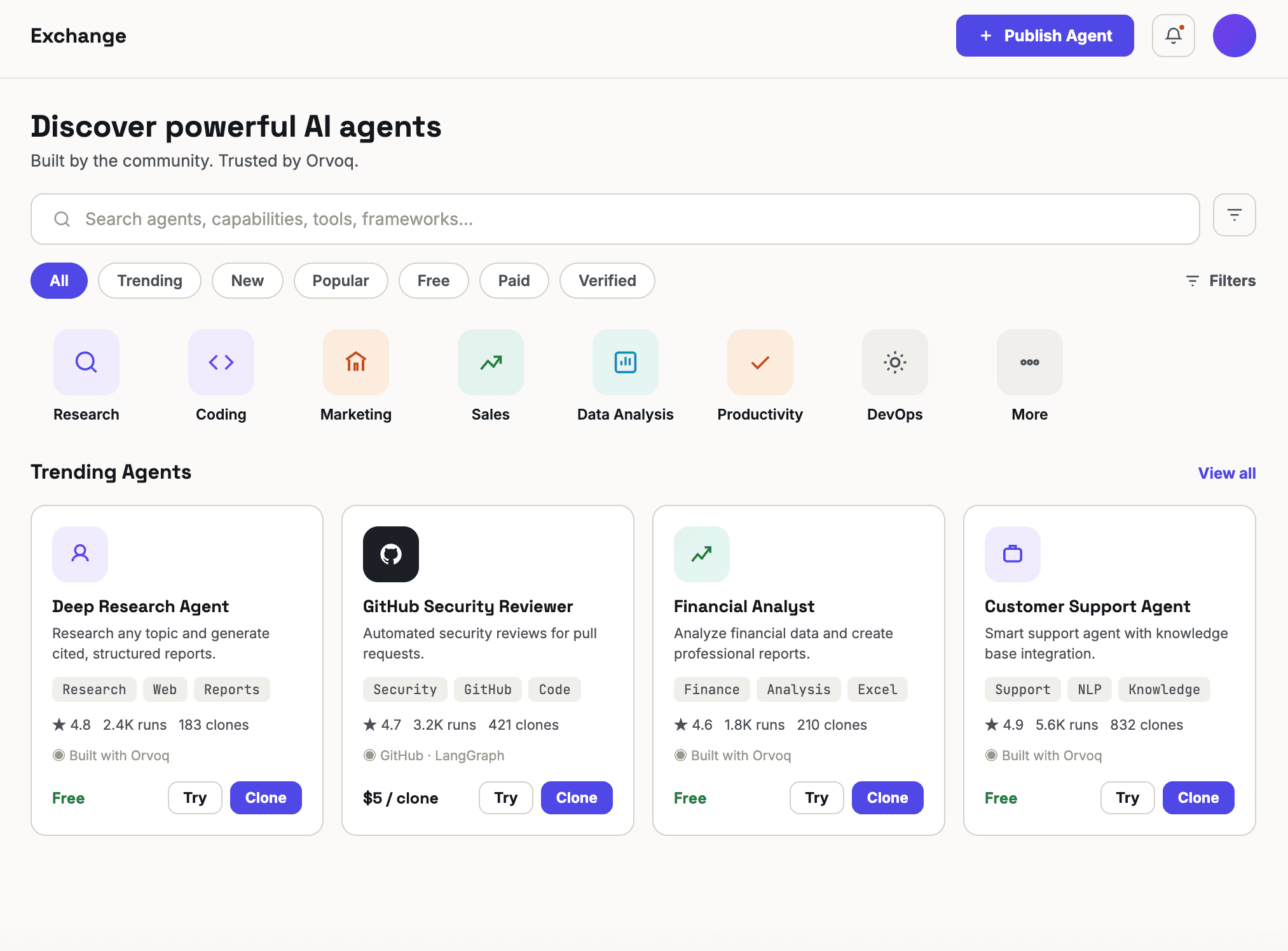
The most immediate benefit is the simplest: when you need an agent and don't want to start from a blank screen, Exchange is where you check first. Search by capability, framework, or plain-language description, or browse by category — Research, Coding, Marketing, Sales, Finance, Customer Support, Data Analysis, Security, DevOps, and more.
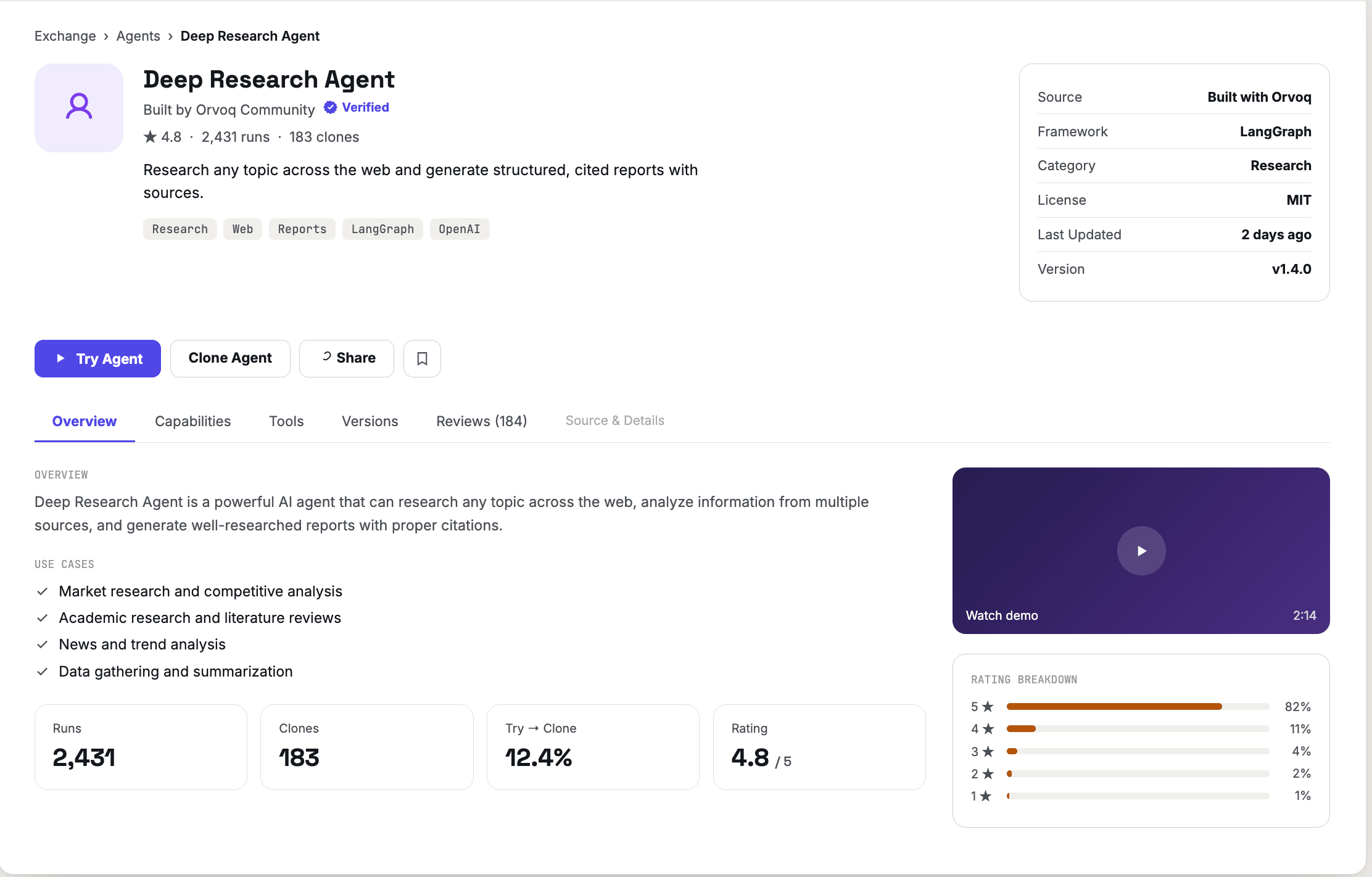
Every listing carries enough signal to judge it before you commit to anything — rating, run count, clone count, trust badges, framework and source, and price:
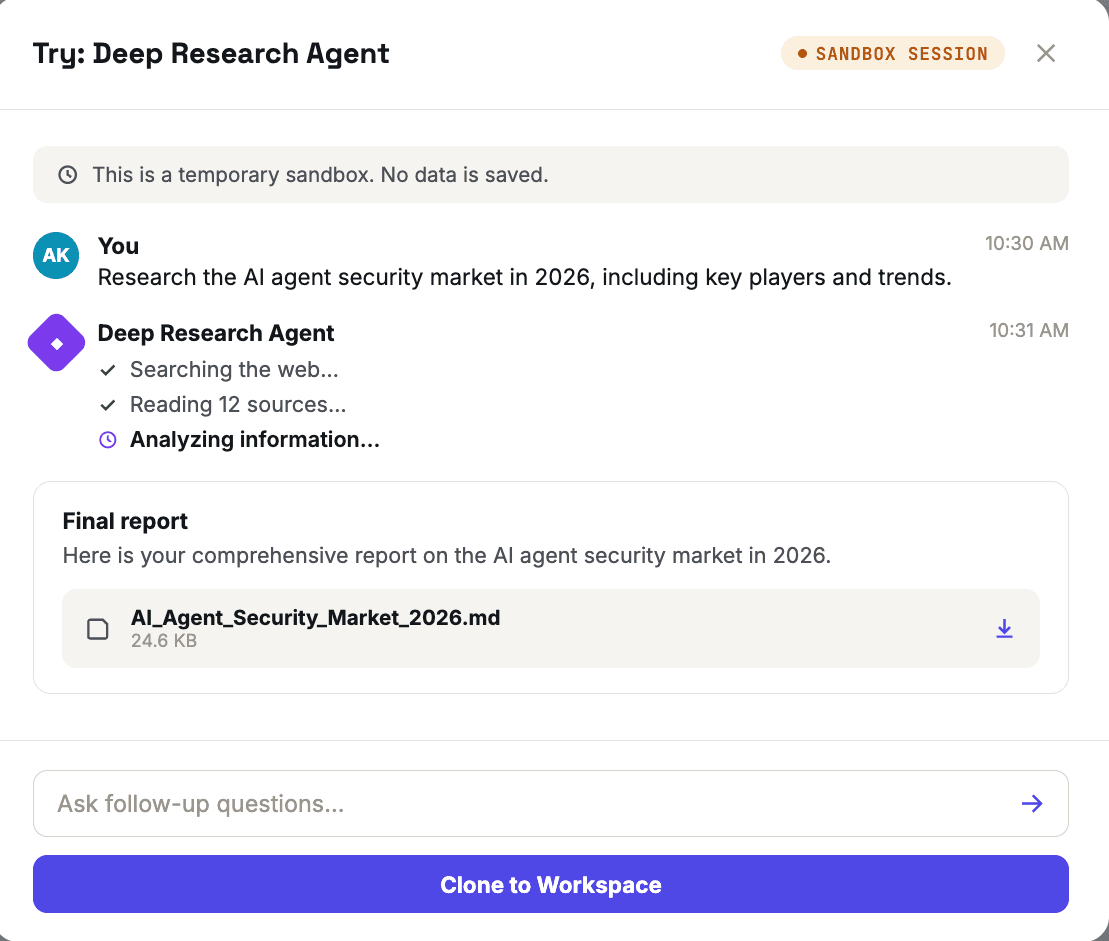
Try Agent runs it in a temporary sandbox session — nothing saved, nothing added to your workspace — so you can see it actually work on a real prompt before deciding anything:
When it's the one you want, Clone copies it into your own workspace, ready to configure like any agent you built yourself.
Helping the rest of your organization, not just yourself
Publishing isn't only for agents you intend to sell. The most common case is internal: your team built a research agent, a security reviewer, a support triage agent — publish it with Organization visibility and every other team in your company can find it, try it, and clone it into their own workspace without ever asking you how it works.
| Visibility | Who can find it |
|---|---|
| Private | Nobody — not listed anywhere |
| Organization | Only people in your own organization |
| Public | The wider Orvoq community |
A public listing may need organization-admin approval before it goes live — that review step is what keeps a public listing actually meaning something, rather than being noise.
Monetizing what you built
If you publish publicly, you choose how it's priced — free, a one-time charge per clone, usage-based, or a subscription. From My Published, you get a dashboard for every agent you've shipped: how many times it's been run, how many clones it's earned, its rating, and — for anything priced — the revenue it's bringing in.
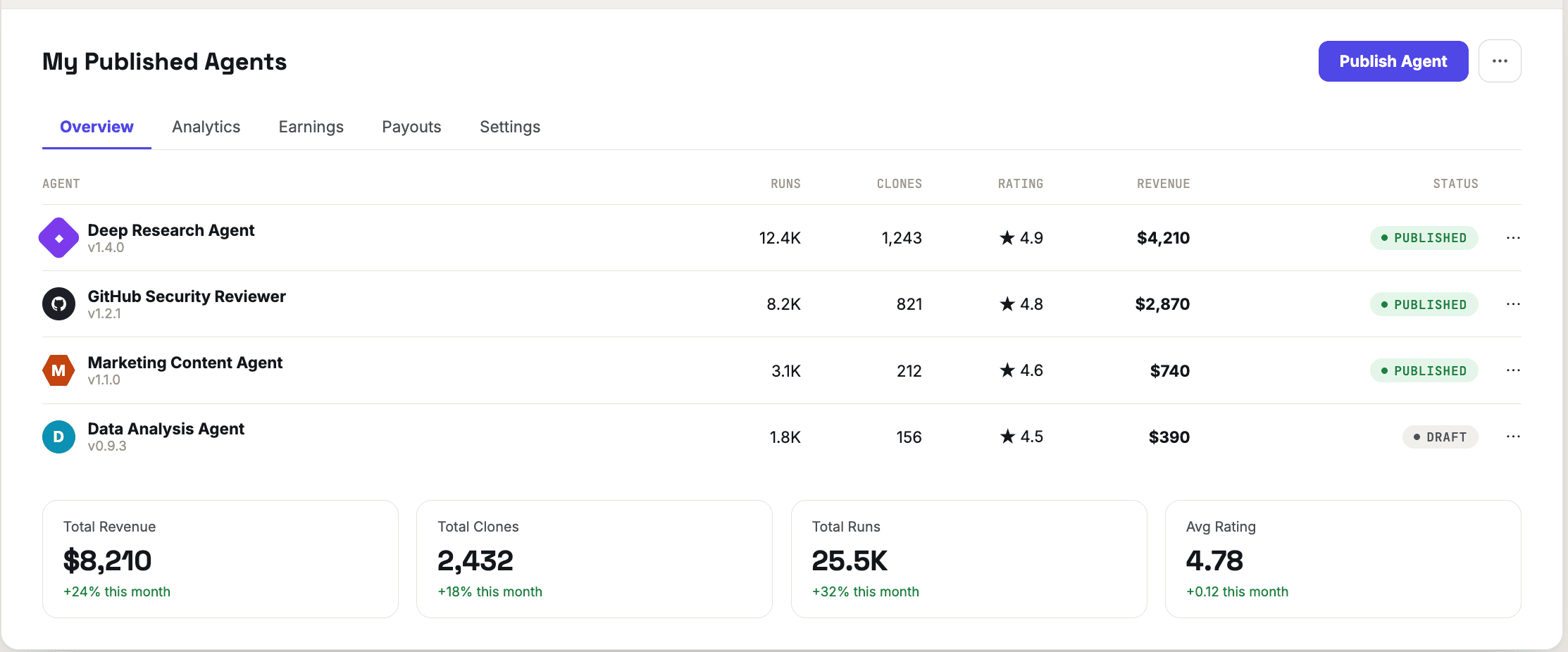
An example dashboard — figures shown are illustrative, not a platform-wide or guaranteed number.
You don't have to build from scratch to publish, either
If you've already got an agent's source in a GitHub repository or as a local project, import it directly — Orvoq analyzes the framework and entry point, then runs it in its own isolated sandbox. Publish that the same way you'd publish anything built natively in Orvoq.
The short version
Exchange makes the work someone already did available to everyone else who'd otherwise have to redo it — faster for the person looking for an agent, more visible credit for the person who built it, and for anything worth charging for, a way to actually get paid for work that keeps helping people long after you shipped it.